Setting SMART Goals for Digital Success
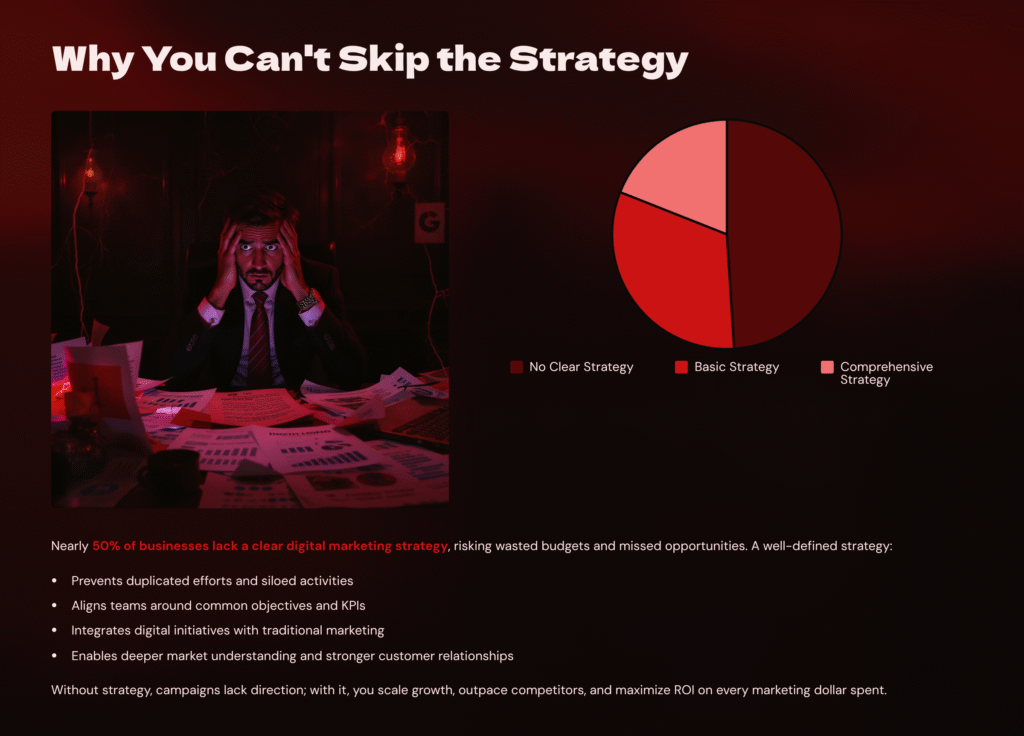
A digital marketing strategy without clear goals is like navigating without a map—directionless and inefficient. One of the most effective frameworks for goal setting is the SMART model: Specific, Measurable, Achievable, Relevant, and Time-bound. Goals that meet these criteria provide clarity, focus, and a basis for performance evaluation. For instance, rather than setting a vague goal like “increase website traffic,” a SMART version would be “increase monthly website visitors by 25% in the next 90 days through SEO and blog content.”
This sets a clear outcome, a measurable target, and a defined timeline. Entrepreneurs often rush into digital marketing with scattered actions across platforms without aligning them with overarching business objectives, leading to poor ROI and burnout. SMART goals act as a filter to prioritise activities and focus limited resources on what truly moves the needle. You might set goals around lead generation, email list growth, customer retention, engagement rates, or revenue per channel. Each goal should map to a specific stage in your customer journey—awareness, interest, desire, or action. Once defined, these goals inform the content strategy, platform selection, budget allocation, and success metrics. Businesses that take the time to write clear, SMART goals tend to stay more focused, measure more accurately, and adapt faster to changing conditions.

Conducting Market and Competitor Research
Understanding your target market and competition is essential before launching any digital campaign. Market research helps identify customer needs, gaps in the market, and trends that can shape your positioning. Begin by defining your ideal customer and understanding their demographics, psychographics, pain points, online habits, and buying motivations. Tools like Google Trends, Statista, and surveys can provide quantitative insights, while interviews and reviews offer qualitative depth. Once you understand your audience, examine your competitors. Identify at least 3–5 key players in your niche and analyse their websites, social media, email campaigns, paid ads, and customer reviews.
What messaging are they using? What keywords are they targeting? How often do they publish content? Tools like SEMrush, SimilarWeb, and Facebook Ad Library can help dissect competitor performance. Look for gaps or weaknesses—such as poor website UX or weak social proof—that you can capitalise on. Market and competitor research ensures you don’t waste time duplicating what’s already out there, but instead develop a distinct, customer-centric strategy that fills unmet needs and stands out. It also helps you benchmark performance and avoid costly assumptions. In short, research is the foundation that ensures your strategy is data-informed rather than guesswork-driven.
Performing a Digital SWOT Analysis
A SWOT analysis is a strategic tool that helps evaluate your Strengths, Weaknesses, Opportunities, and Threats in the digital environment. By analysing internal and external factors, you gain insights that guide better marketing decisions. Start with strengths—these may include a loyal customer base, high-quality content, strong brand identity, or in-house digital expertise. Weaknesses could involve a lack of website optimisation, small ad budget, inconsistent branding, or minimal SEO knowledge. Opportunities are external trends or gaps you can leverage—such as a rise in mobile usage, emerging platforms like TikTok, or a competitor’s recent PR blunder. Threats might include aggressive new competitors, algorithm changes, rising ad costs, or negative online reviews. This analysis helps you identify what to double down on, what to fix, what to test, and what to watch out for. For example, if your strength is local SEO but your weakness is low engagement on Instagram, your strategy could prioritise Google My Business while testing visual content improvements. SWOT becomes a living document you revisit as your business evolves and markets shift. It promotes self-awareness and strategic clarity—two traits essential for sustained digital growth.

Choosing the Right Digital Channels for Your Business

Not every business needs to be on every digital platform. Choosing the right mix of marketing channels ensures you reach your ideal customer without stretching yourself too thin. Begin by understanding where your audience spends their time online and what type of content they consume. For example, professionals may prefer LinkedIn and email, while Gen Z might live on TikTok and YouTube. Product-based businesses may benefit from Instagram, Pinterest, and Google Shopping, whereas service-based brands may thrive through SEO, YouTube tutorials, or webinars. Core channel categories include search marketing (SEO, PPC), content marketing (blogs, videos, infographics), email marketing, social media (organic and paid), and affiliate or influencer marketing. A multi-channel strategy works best when channels support each other—e.g., blog posts drive SEO traffic, which is retargeted through Facebook ads, while emails nurture leads who download lead magnets. When starting out, pick 2–3 core platforms that align with your goals, budget, and capacity. Over time, as you gather data and grow resources, you can expand. Selecting the right channels early prevents wasted effort and ensures every hour and dollar spent contributes to business growth.
Mapping Your Customer Journey

The customer journey is the path a user follows from discovering your brand to becoming a loyal customer and advocate. Mapping this journey ensures that your digital strategy addresses every stage with tailored messaging and appropriate touchpoints. Typical stages include awareness (they discover you), consideration (they research and compare), conversion (they buy or sign up), retention (they return), and advocacy (they refer others).
Each stage requires different content and calls to action. For example, blog posts and social media reels work well at the awareness stage; email sequences and testimonials help in consideration; limited-time offers and free trials convert; onboarding emails and customer support encourage retention; while referral programs and reviews drive advocacy.
Visualising your customer journey also helps identify bottlenecks. If your traffic is high but conversions are low, you may need better landing pages or clearer CTAs. If you have many one-time buyers, your retention strategy may be weak.
The goal is to build a seamless, value-driven path where each stage flows naturally into the next. Businesses that map and optimise their customer journey see higher conversion rates, increased lifetime value, and stronger brand loyalty.
Defining Your Unique Value Proposition (UVP)
Your Unique Value Proposition (UVP) is the clear, compelling reason why someone should buy from you instead of your competitors. It’s not just what you do, but why it matters to your customer. A strong UVP communicates what makes your product or service different, better, or more valuable in a way that resonates emotionally and logically. To create a UVP, start by understanding your customers’ pain points and what they value most—speed, cost, quality, experience, personalisation, sustainability, etc. Then articulate how your solution uniquely delivers that benefit. For example, “We help busy parents get healthy dinners on the table in 15 minutes or less with our ready-to-cook meal kits—no planning, chopping, or shopping required.”
Your UVP should be featured prominently on your website homepage, in your ad copy, and across your marketing materials. It becomes the anchor of your brand messaging. Weak or vague UVPs lead to poor conversion rates and brand confusion. Strong UVPs increase trust, attract better-fit customers, and improve marketing efficiency because you’re consistently reinforcing a clear promise. Test different versions of your UVP and refine it based on customer feedback and behaviour.
Creating a 90-Day Digital Marketing Plan
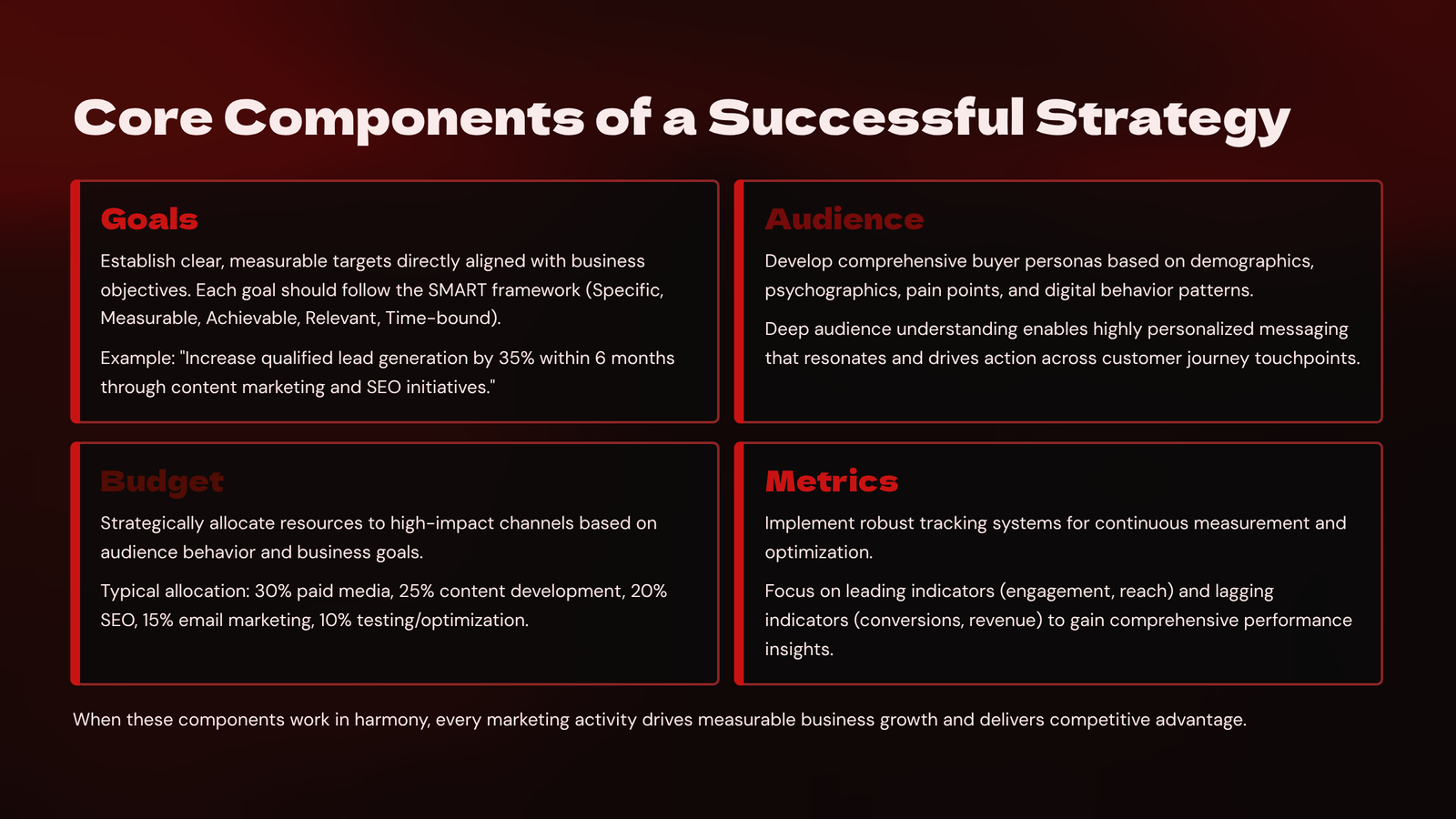
Once your goals, audience, channels, and messaging are clear, it’s time to put everything into action with a focused 90-day marketing plan. This timeframe is short enough to maintain momentum but long enough to show measurable results. Begin by breaking your SMART goals into actionable steps, assigning each task to a week or team member. For example, if your goal is to generate 100 leads, your plan may include writing 6 blog posts, running a Facebook ad campaign, publishing weekly emails, and building one lead magnet. Schedule content in a marketing calendar to maintain consistency. Allocate a budget by channel, track KPIs weekly, and leave room for flexibility and optimisation. Include campaign themes or promotional pushes tied to product launches, seasons, or industry events. Use tools like Trello, Asana, Notion, or Google Sheets to visualise your plan. At the end of 90 days, conduct a review: what worked, what underperformed, and what to improve. This iterative cycle of plan–execute–analyse–refine is the heartbeat of successful digital marketing. A clear 90-day plan reduces overwhelm, improves accountability, and ensures your daily tasks align with your long-term business goals.

Defining and Tracking Key Performance Indicators (KPIs)
Key Performance Indicators (KPIs) are the metrics that show whether your digital strategy is working. They should align directly with your goals and provide actionable insights. For example, if your goal is lead generation, key KPIs might include number of form submissions, cost per lead (CPL), and email list growth rate. For e-commerce, metrics like cart abandonment rate, average order value, and return customer rate are crucial. Engagement-focused campaigns might track click-through rates (CTR), bounce rates, or time on site.
Tools like Google Analytics, Meta Business Suite, and HubSpot help track these KPIs in real time. Avoid vanity metrics—like followers or impressions—that don’t tie directly to results. Instead, focus on performance indicators that influence revenue or customer behaviour. Create a KPI dashboard or monthly report to stay on top of performance and make data-driven decisions. Over time, tracking KPIs helps you double down on what works, improve what doesn’t, and justify marketing spend. It turns your strategy from “spray and pray” into a measurable, optimisable growth engine.