The Role of a Website in Digital Marketing
Your website is your business’s digital headquarters, often the first point of contact between you and a potential customer. Unlike social media platforms, which you do not own or control, your website is a permanent digital asset that you can shape to fit your brand and business objectives. A well-designed website doesn’t just look good—it performs. It builds trust, conveys your brand identity, communicates your unique value proposition, and most importantly, converts visitors into leads or customers. For entrepreneurs and small business owners, the website is a 24/7 salesperson, customer service hub, and storytelling platform rolled into one.
It enables your other digital channels—SEO, email, social media, and paid ads—to succeed by serving as the destination for traffic. If your website is slow, confusing, outdated, or untrustworthy, it creates friction that kills conversions and damages your brand’s credibility. Essential elements of a strong website include clear navigation, fast loading times, responsive design (mobile-friendly), SEO-optimised pages, compelling visuals, and concise copywriting. Moreover, your website should align with your customer’s journey—from problem awareness to solution consideration to purchase or sign-up—providing relevant content at each stage. In short, your website must serve both your audience’s needs and your business goals simultaneously to be effective.

Mobile-Responsive and User-Friendly Design
In 2025, more than 70% of web traffic comes from mobile devices, making mobile responsiveness an absolute necessity—not an option. A mobile-responsive site automatically adjusts layout, font sizes, buttons, and images to provide an optimal experience on smaller screens such as smartphones and tablets. Websites that fail to load properly or require users to pinch and zoom lose trust within seconds. Google also considers mobile-friendliness a ranking factor, which means poor design can negatively affect your SEO.
But mobile responsiveness is only one part of the equation. A user-friendly design ensures that navigation is intuitive, actions are obvious, and users can find what they’re looking for quickly. Clear menus, prominent CTAs (calls to action), consistent fonts and colours, and adequate whitespace are all key to usability. The “3-click rule” suggests users should be able to reach any important page on your site within three clicks. Confusing layouts, broken links, or cluttered pages frustrate users and increase your bounce rate. Tools like Google’s Mobile-Friendly Test, Hotjar recordings, and UX design templates help you identify and fix usability issues. As users increasingly expect seamless, app-like experiences, prioritising mobile optimisation and simplicity of interaction is essential to digital success.
Crafting High-Converting Landing Pages
A landing page is a standalone web page created specifically for a marketing or advertising campaign. Unlike your homepage, which may have multiple navigation links and general information, a landing page has one specific goal—to convert the visitor, usually into a lead or a buyer. High-converting landing pages follow proven psychological and design principles. The most effective ones open with a powerful headline that clearly states the benefit of the offer. This is followed by a subheadline, a visual (image or video), a concise explanation of value, social proof (testimonials or trust badges), and a single, clear call to action (e.g., “Download the Free Guide” or “Book a Free Demo”). The fewer the distractions—such as extra links or menus—the higher the conversion rate. Effective landing pages match the messaging of the ad or email that brought the user there, ensuring message match and continuity. A good landing page also includes emotional appeal, urgency (e.g., “limited spots”), and trust signals (e.g., “used by 10,000+ users”). Tools like Unbounce, Leadpages, and Elementor help create landing pages without coding. Split testing different versions of landing pages helps fine-tune what works best. In summary, a well-crafted landing page is often the difference between a bounced visitor and a new customer.

Understanding UX (User Experience) and UI (User Interface)

User Experience (UX) and User Interface (UI) are central to how visitors interact with your website. UX refers to the overall experience a user has when navigating your site—how smooth, enjoyable, and efficient the journey is. UI refers to the visual and interactive elements, such as buttons, colours, menus, and typography. A site with good UX is intuitive, fast, and focused on the user’s goals, while a site with good UI is aesthetically appealing and branded consistently. Entrepreneurs often prioritise design aesthetics without thinking about the user journey. However, even a beautiful site will fail if it is hard to use. Important UX principles include clear navigation paths, loading speed, mobile compatibility, feedback loops (like confirmation messages), and minimal user friction. The best sites guide users through content as if leading them down a carefully designed path to a goal. Use real user testing, session recordings, and behaviour maps to find where users drop off or get stuck. Good UI supports good UX—it makes using the website feel effortless. Consistent icons, readable fonts, and visual hierarchy help guide the eye and promote ease of use. When both UX and UI work in harmony, your website becomes not just usable, but delightful—and delight drives conversions.
Conversion Rate Optimisation (CRO) Fundamentals

Conversion Rate Optimisation (CRO) is the process of improving your website or landing page so that a higher percentage of visitors take the desired action—whether it’s signing up, making a purchase, or booking a call. A small increase in conversion rate can result in a significant boost in revenue without increasing your traffic or ad spend. For example, improving your conversion rate from 2% to 4% effectively doubles your leads.
CRO starts with data—using tools like Google Analytics, heatmaps (e.g., Hotjar), and user recordings to see how people behave on your site. Look for signs of friction: where are users dropping off? Are they scrolling but not clicking? Are they abandoning carts at a specific step? Once pain points are identified, you test hypotheses to improve them—this might include changing a headline, adjusting CTA placement, improving form design, or adding urgency.
The key principle is continual testing and learning. Even minor tweaks—like changing button colour, using a shorter form, or simplifying copy—can lead to significant improvements.
CRO also involves aligning with buyer psychology: clarity, simplicity, social proof, and risk reduction (like guarantees) tend to increase trust and conversions. For small business owners, CRO ensures that the traffic you’ve worked hard (or paid) to get doesn’t go to waste.
Using A/B Testing and Analytics for Improvement
A/B testing (also known as split testing) is a scientific method of comparing two versions of a webpage or campaign element to determine which performs better. In its simplest form, you show version A to half your visitors and version B to the other half, then measure which version achieves higher conversions. You can A/B test headlines, CTAs, images, form fields, colours, pricing, or entire page layouts. The key is to change only one variable at a time to accurately measure impact. Tools like Google Optimize, VWO, or Convert make this process accessible, even for beginners. Pair A/B testing with analytics tools to guide what to test—don’t guess blindly. For example, if your heatmap shows users aren’t scrolling past the fold, you may test moving your CTA higher.
A/B testing takes the guesswork out of web design by replacing assumptions with data-driven decisions. Over time, continuous testing compounds results and creates a site optimised for your specific audience. Analytics also help segment performance by traffic source, device type, or user behaviour, helping you personalise your approach. When combined, analytics and A/B testing transform your website from a static brochure into an adaptable, high-performing marketing asset.
Essential Tools for Website Management and Optimisation
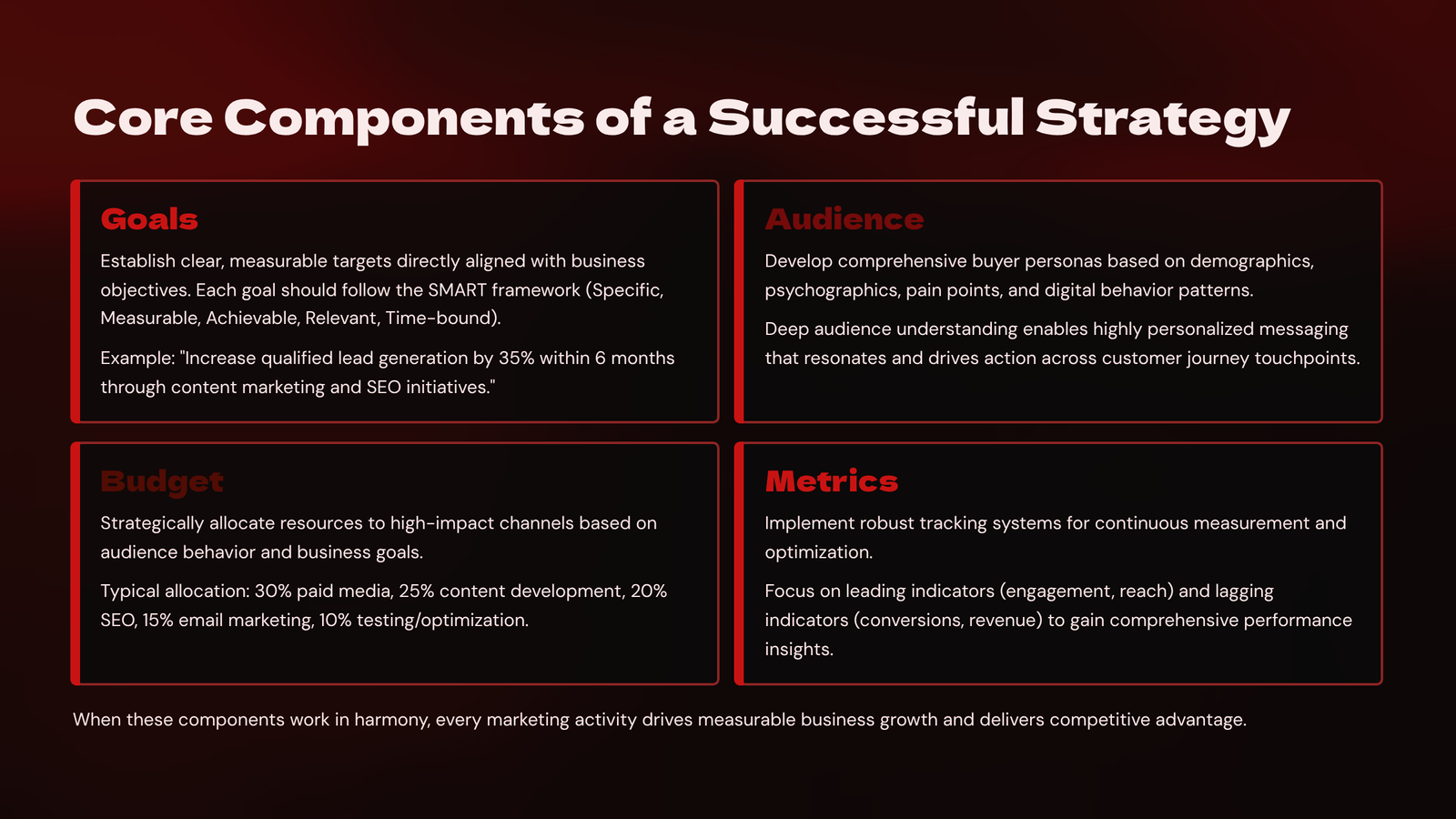
There is a wide range of tools available to help entrepreneurs build, manage, analyse, and optimise their websites without needing advanced technical skills. For building and designing, platforms like WordPress, Wix, Squarespace, or Shopify (for e-commerce) offer drag-and-drop functionality and mobile-responsive templates. For conversion tracking and analytics, Google Analytics, Google Tag Manager, and Hotjar are essential. For page speed and performance optimisation, tools like GTmetrix, PageSpeed Insights, and Cloudflare help diagnose and fix speed issues. A/B testing tools like Google Optimize, VWO, or Unbounce allow for structured experimentation. For lead generation and pop-ups, tools such as OptinMonster, Sumo, and Hello Bar help convert visitors into subscribers or leads. For SEO, Yoast SEO (for WordPress), Ahrefs, and Ubersuggest guide content and keyword improvements. Even email tools like ConvertKit or Mailchimp can be embedded in your website to automate follow-up. Choosing the right tools depends on your goals, budget, and platform, but the priority should always be tools that help you track user behaviour and increase conversions. With the right tech stack, your website becomes an agile, intelligent sales machine—not just a static online presence.