Why Organic Social Media Matters for Small Businesses
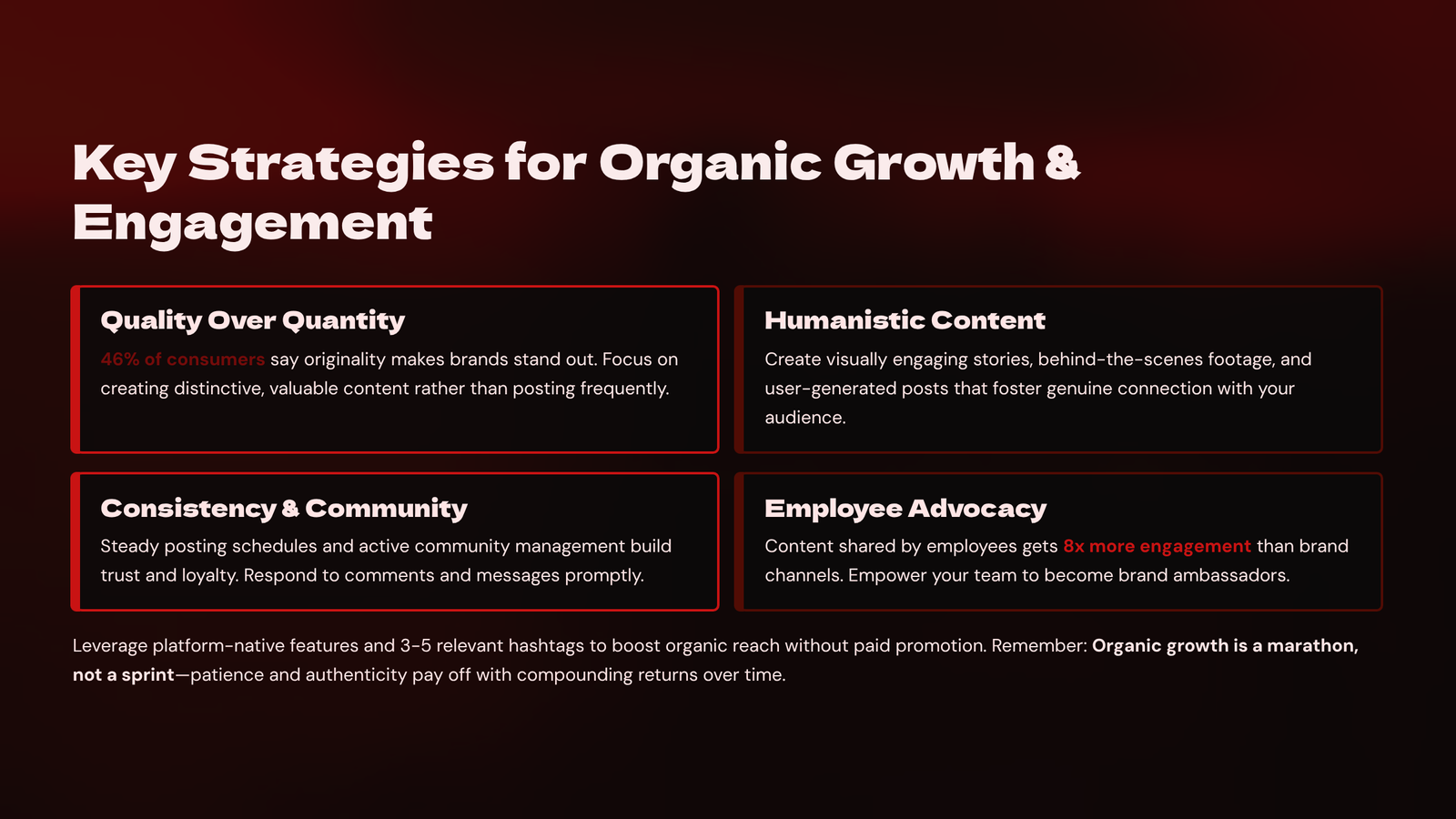
Organic social media marketing refers to the use of free tools and strategies on platforms like Facebook, Instagram, LinkedIn, TikTok, and Twitter (X) to build brand awareness, engage audiences, and develop customer relationships without paying for ads. For small businesses, organic reach offers a powerful way to connect with audiences in a personal, humanised way. It allows you to showcase your brand’s personality, values, behind-the-scenes processes, customer stories, and real-time updates. Unlike traditional media, which is one-directional, social media creates a two-way dialogue—customers can like, comment, share, and message directly. This real-time interaction builds trust and fosters community, often converting followers into loyal advocates.
Organic reach may be more limited compared to paid ads, but it delivers higher engagement and authenticity, which is vital in building long-term brand equity. Additionally, organic social posts contribute to your overall digital presence and content ecosystem—they drive traffic to your website, support SEO through link sharing, and can even result in PR opportunities. Platforms reward consistency and engagement, not just flashy visuals or viral trends. For entrepreneurs with limited budgets, a smart organic strategy offers meaningful results when executed with consistency, creativity, and responsiveness.
Choosing the Right Platforms for Your Brand
Every social media platform serves a different audience and purpose, so choosing where to focus your efforts is key to maximising ROI. Facebook is ideal for local businesses, community engagement, events, and longer-form posts. Instagram works well for visually-driven brands—fashion, food, wellness, and lifestyle—and supports reels, stories, and carousel posts. LinkedIn is the go-to platform for B2B businesses, consultants, coaches, and service professionals—it favours thought leadership, personal branding, and networking.
TikTok is rapidly growing among Gen Z and millennials, with short-form, creative, and often humorous or educational content performing best. Pinterest excels for niche-specific content like DIY, home decor, beauty, wedding planning, and recipes. YouTube serves long-form video and is excellent for evergreen, searchable content like tutorials, reviews, and brand storytelling. Don’t try to be everywhere—start with 1–2 platforms where your audience is active and your content style aligns. Study platform demographics, content trends, and competitors before deciding. Monitor where your website traffic and leads are coming from using tools like Google Analytics. Once you gain traction, you can expand or repurpose content across platforms. Choosing the right platform is not about being trendy; it’s about being strategic and focused.
Creating Engaging Content That Resonates
To succeed with organic social media, you must create content that not only captures attention but also adds value. Every post should serve one or more purposes: educate, entertain, inspire, or inform. Start by identifying your content pillars—recurring themes aligned with your brand and audience interests. For example, a personal trainer might use pillars like workout tips, client transformations, healthy recipes, and motivational quotes. Mix up your formats: use reels or TikToks for dynamic reach, carousel posts for step-by-step tutorials, stories for day-in-the-life moments, and static posts for quick tips or reminders. Strong visuals—whether photos, graphics, or videos—are essential, but the caption is where connection happens. Speak in your brand voice, use relatable language, and include clear calls to action, such as “Save this tip for later” or “Tag someone who needs this.” Incorporate storytelling to humanise your business—share challenges, wins, lessons, or customer journeys. Encourage engagement by asking questions, running polls, or sharing behind-the-scenes content. Consistent value builds trust over time, turning passive scrollers into active followers and eventually loyal customers. Quality always trumps quantity, but in today’s algorithm-driven platforms, consistency plus value equals visibility.

Building a Content Calendar and Publishing Schedule

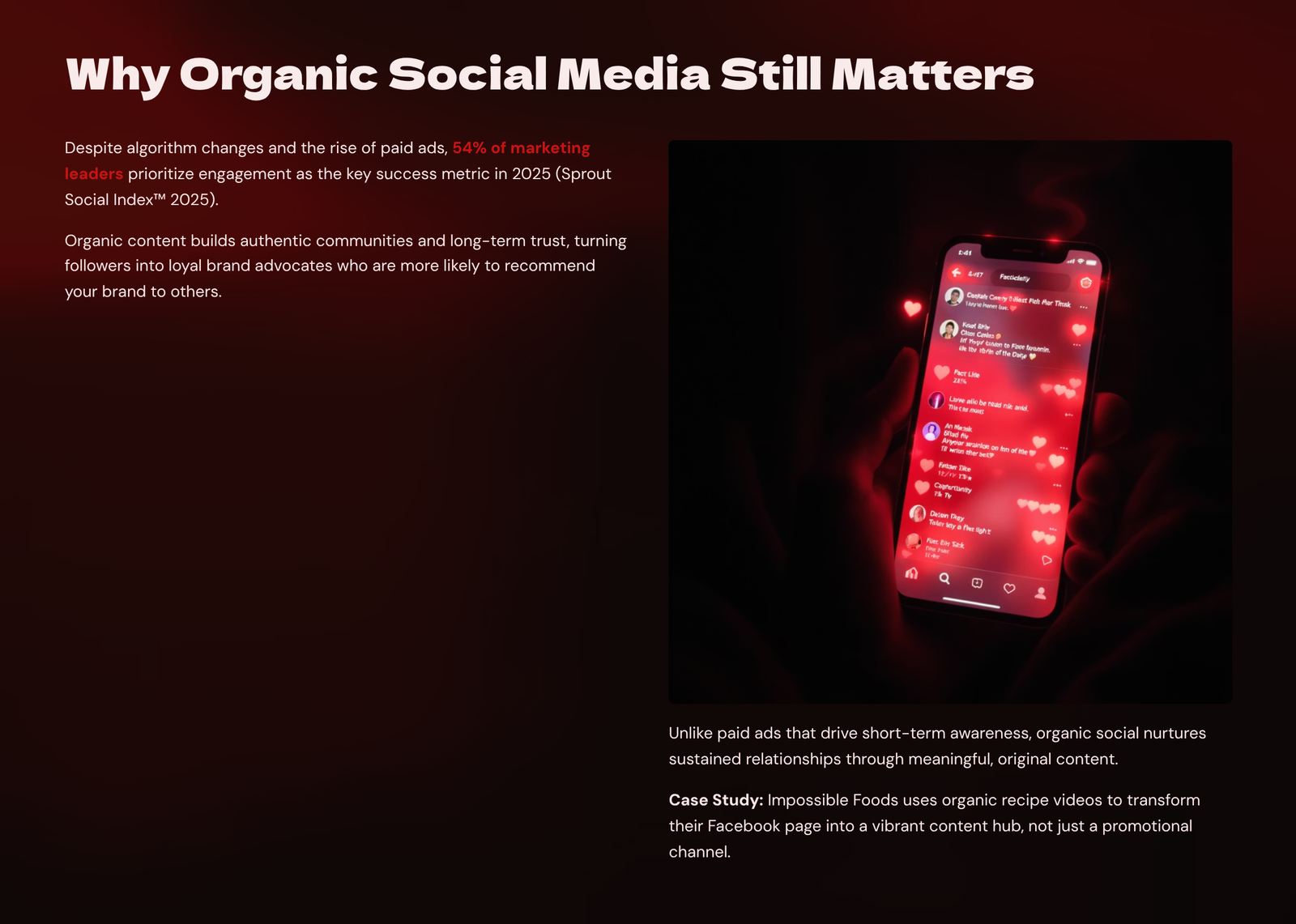
Consistency is one of the most important factors in succeeding with organic social media. A content calendar helps you stay organised, maintain frequency, and align content with key events, launches, or seasonal trends. Start by deciding your posting frequency—for most platforms, 3–5 times per week is a solid goal. Use your content pillars to fill in weekly themes—for example, “Motivation Monday,” “Tip Tuesday,” or “Behind-the-Scenes Friday.” Plan your posts in advance using tools like Notion, Trello, Google Sheets, or Airtable. Then use scheduling platforms such as Meta Business Suite (for Facebook and Instagram), Buffer, Later, or Hootsuite to automate posting and reduce daily workload. Include platform-specific variations—what works on Instagram may not resonate on LinkedIn. Keep space for spontaneous, real-time content like trending topics, customer shoutouts, or team updates. A well-maintained calendar improves clarity, saves time, and ensures that your messaging remains aligned with business goals. It also reduces the emotional pressure of “What do I post today?” and shifts your content from reactive to proactive. The more strategic your schedule, the more predictable and measurable your results become.
Building Engagement and Community
Engagement is the lifeblood of organic social media—it signals relevance to algorithms and builds emotional connection with your audience. To build real community, you must treat social media as a two-way street. That means responding to comments, DMs, mentions, and even engaging on others’ posts.
Acknowledge followers, celebrate customers, and foster conversation rather than just broadcasting messages. Use interactive features like polls, quizzes, countdowns, and question boxes (especially on Instagram Stories) to encourage participation.
Create content that invites user-generated content—ask followers to share photos of them using your product or to post testimonials using a branded hashtag. Feature your followers in your content to build loyalty and social proof. Host live videos or AMAs (Ask Me Anything) to speak directly with your audience in real time.
The goal is not just to grow followers but to nurture relationships. Focus on the quality of engagement (comments, shares, saves) rather than vanity metrics (likes and follower counts). A small, active, loyal following is far more valuable than a large, disengaged one. Brands that prioritise connection over promotion create communities that sell for them through word of mouth, testimonials, and referrals.
Tracking Performance and Optimising
To continually improve your organic social media strategy, you must measure what matters. Start by defining your key performance indicators (KPIs)—these could include reach, engagement rate, comments, shares, saves, website clicks, or lead generation from social traffic. Use native platform analytics like Instagram Insights, LinkedIn Analytics, Facebook Insights, or TikTok Analytics to monitor performance post by post. Look for patterns: What type of content gets the most saves? What time of day brings more reach? What captions or topics trigger comments? Compare your performance month to month, not post to post, to account for algorithm fluctuations.
Use this data to refine your content mix, posting schedule, and messaging. For example, if carousel posts consistently outperform single images, double down on carousels. If your educational posts underperform but storytelling ones go viral, adapt your tone. Also monitor link clicks and traffic from social media using Google Analytics UTM tracking. Performance insights allow you to pivot from guesswork to data-driven strategy. The most successful small businesses use analytics not just to report results, but to guide next actions.