Understanding Sales Funnels and Why They Matter
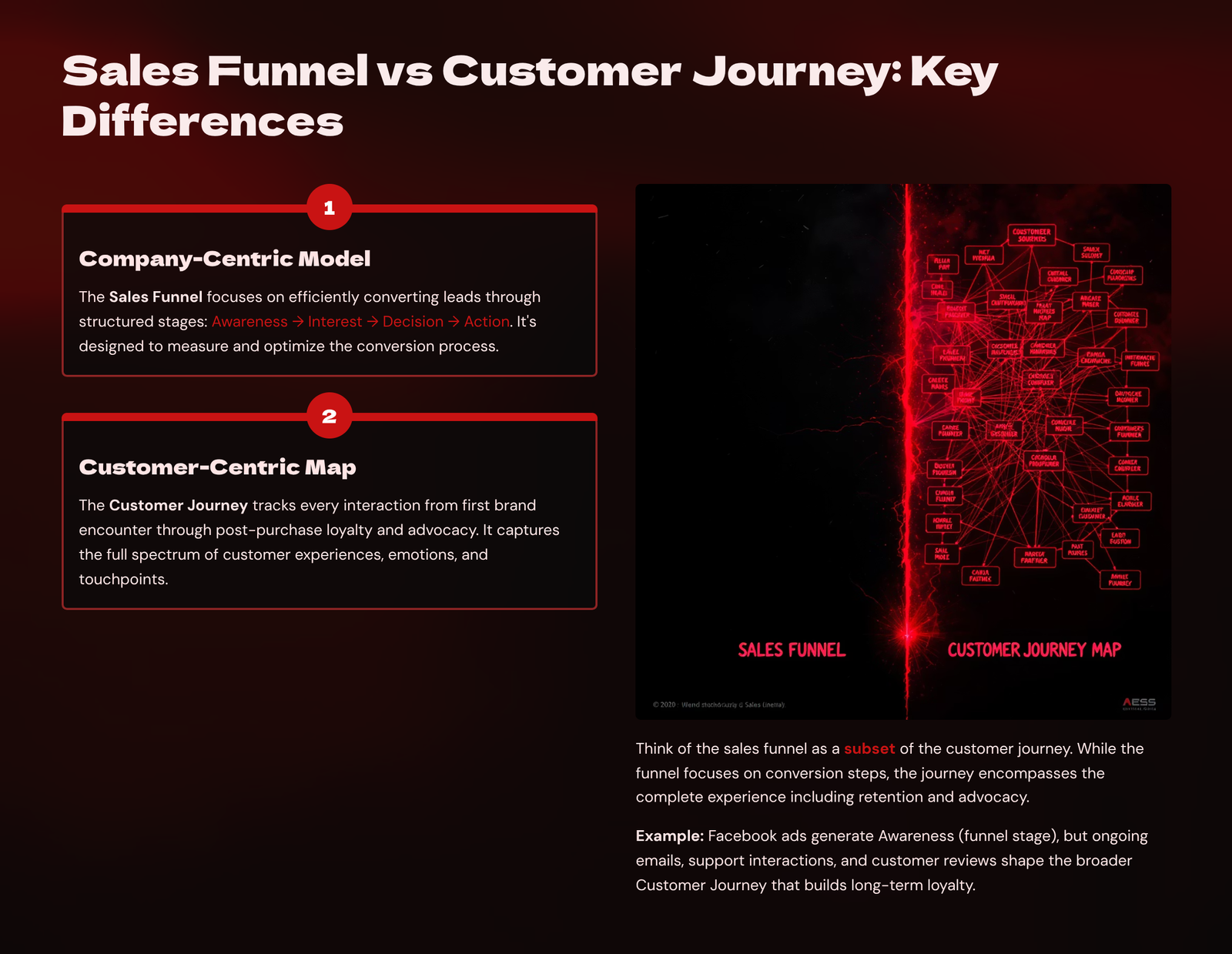
A sales funnel is a strategic framework that guides a potential customer through a journey—from discovering your business to becoming a loyal client. It’s called a “funnel” because, just like the physical object, it starts wide with many leads at the top and narrows as people progress through stages of qualification and decision-making. For entrepreneurs and small business owners, a sales funnel helps you organise marketing activities around the psychology of the buyer, ensuring the right message is delivered at the right time. Instead of expecting someone to buy on their first visit, the funnel recognises that people need information, trust, comparison, and nudges before making a purchase.
Each step of the funnel is an opportunity to build value, answer objections, and position your offer clearly. Funnels can be simple (a two-step lead form + email series) or complex (ads, webinars, tripwires, upsells). What matters is intentionality: you’re not leaving conversions to chance, but designing a path for users to follow. Mastering sales funnels is key to scaling sustainably—because once you know your conversion rates, you can confidently invest in traffic and predict revenue growth.
Customer Journey Mapping: Awareness to Advocacy
Customer journey mapping is the process of visually outlining how a person becomes a customer—and then a repeat buyer or brand advocate. It includes every touchpoint, channel, emotion, and question they encounter from first contact to post-purchase. The typical journey follows five stages: Awareness (I have a problem), Consideration (what are my options?), Decision (why you?), Purchase (let’s go), and Retention/Advocacy (I’m happy, I’ll refer others).
Mapping this journey allows you to create content and campaigns that align with what the customer needs at each stage. For example, at the Awareness stage, blog posts, reels, or social ads that highlight pain points work well. In the Consideration phase, comparison guides, webinars, or case studies become crucial. During Decision, clear pricing, guarantees, and testimonials help tip the scale. After Purchase, onboarding emails, loyalty offers, or feedback requests keep engagement high. By thinking from the customer’s point of view, you stop guessing what to say—and start creating experiences that feel personal, logical, and emotionally resonant. Journey mapping transforms your marketing from pushy to purposeful.
TOFU, MOFU, BOFU: Funnel Stage Strategy
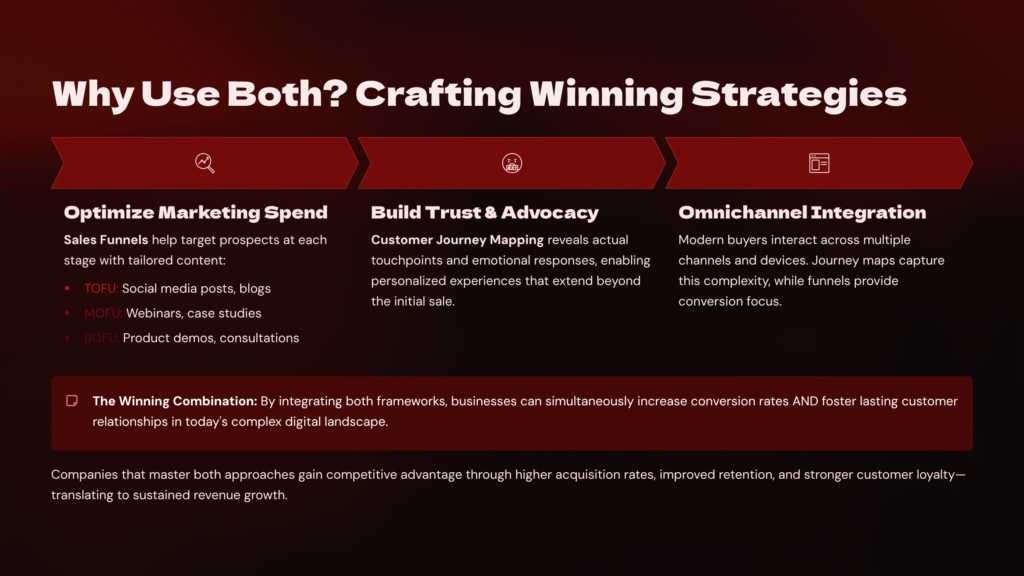
A highly effective way to design a sales funnel is by dividing it into three key stages: TOFU (Top of Funnel), MOFU (Middle of Funnel), and BOFU (Bottom of Funnel). Each stage corresponds to a different level of awareness and requires distinct content and strategy. TOFU is all about visibility and attraction—it’s where people are just discovering their problem or seeing your brand for the first time. Ideal content here includes educational blogs, YouTube videos, Instagram reels, free guides, or social ads that speak to pain points and introduce solutions. MOFU is where leads are actively evaluating options—they’re aware of you and others, and they want deeper insights. Webinars, email sequences, case studies, quizzes, and retargeted content shine here. BOFU is where the decision happens—your job is to overcome objections, offer proof, and remove friction. Content like pricing breakdowns, testimonials, comparison pages, FAQs, and limited-time offers work well. Mapping TOFU–MOFU–BOFU ensures that your funnel doesn’t treat everyone the same, but rather provides the right level of information based on their readiness to buy. This segmentation dramatically improves conversion rates and customer satisfaction.

Lead Magnets, Tripwires, and CTAs That Convert

At each funnel stage, you need content that incentivises movement to the next step. Lead magnets are high-value free offers that capture email addresses—think eBooks, cheat sheets, templates, checklists, webinars, or discount coupons. The key to a great lead magnet is specificity: solve one real problem fast. Once a user opts in, a tripwire offer (a low-ticket product or offer under £50) can introduce them to your paid ecosystem with minimal risk. Tripwires convert browsers into buyers and help segment serious leads from casual ones. After the tripwire, your CTA (Call to Action) becomes more direct—book a call, start a trial, or buy the core product. Every landing page, email, and ad should have a single, clear CTA aligned with its funnel stage. Strong CTAs use action language (“Download Now,” “Watch Free Demo”) and reduce uncertainty (“No credit card required,” “Only takes 2 minutes”). By using well-crafted lead magnets and offers at each stage, you guide users naturally from awareness to action—without pressure, just value.
Integrating Funnels Across Your Digital Channels

A funnel isn’t isolated—it’s woven through your entire digital presence. Website pages, emails, ads, content, and CRM should all point users toward the next logical step in the journey. For instance, your Facebook ad might lead to a landing page with a lead magnet, which triggers an email nurture sequence. The email might offer a webinar or tripwire, followed by a BOFU pitch and conversion CTA. Your blog should include CTAs to opt-in or book a call.
Retargeting ads can nudge visitors who saw the landing page but didn’t sign up. Your CRM segments leads based on what content they engage with, sending personalised follow-ups. This multi-channel integration ensures leads don’t drop off—they’re gently and repeatedly guided through the funnel no matter which platform they use. Using tools like Zapier, GoHighLevel, HubSpot, or ActiveCampaign, you can connect your systems so leads flow smoothly from ad to offer to sale. Integration transforms your funnel from a set of tactics into a machine that works even while you sleep.
Analysing and Optimising Funnel Performance
No funnel is perfect the first time—it must be measured, analysed, and improved. Key funnel metrics include opt-in rate (how many people downloaded your lead magnet), conversion rate (who bought after engaging), email open/click rate, ad CTR and ROAS, and sales per 100 leads. Use tools like Google Analytics, Facebook Ads Manager, and your CRM dashboard to monitor each stage. If leads drop off at the MOFU stage, you may need better email copy or a clearer offer.
If your lead magnet has low downloads, your headline or landing page may need rewriting. A/B test CTAs, subject lines, email timing, and tripwire pricing. Sometimes, small tweaks like adding urgency or improving design can boost conversions significantly. Document everything so your funnel becomes a predictable, repeatable system. Over time, an optimised funnel becomes a scalable revenue engine, allowing you to grow confidently without burning out.