The Unique Challenges and Opportunities of Service Marketing
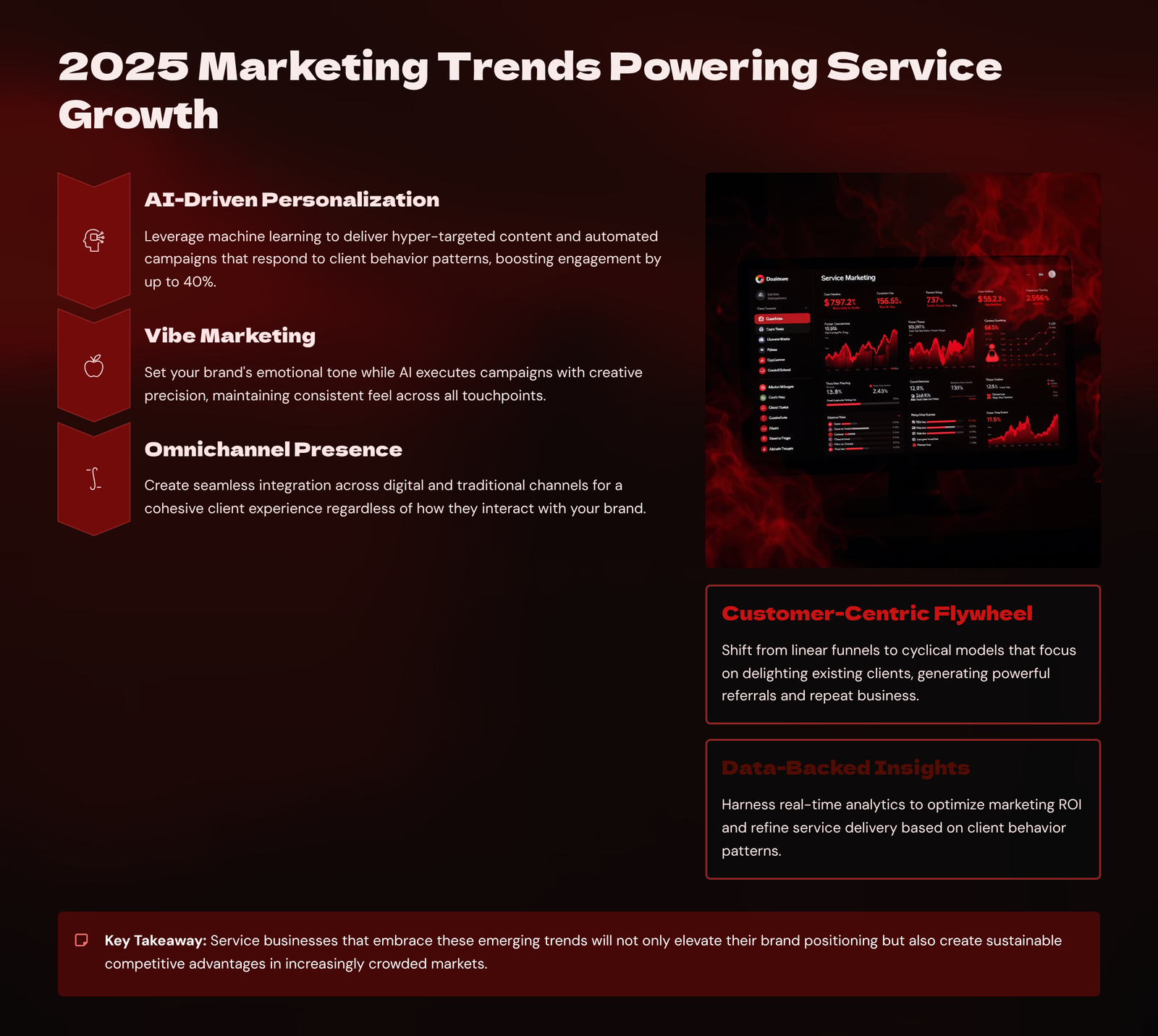
Marketing services is fundamentally different from marketing products. Services are intangible, experience-based, and often deeply personal, which means buyers rely heavily on trust, reputation, and perceived expertise. There is no physical product to showcase or touch—what you’re selling is a promise of a transformation, result, or convenience. This makes trust the currency of conversion, especially in sectors like coaching, consulting, health, beauty, legal, or home improvement.
Since customers can’t “test” your offering beforehand, their decision is driven by testimonials, case studies, credibility, and how well you communicate the value of the outcome. On the flip side, services offer unique opportunities for personalisation, high margins, recurring revenue, and word-of-mouth growth. Unlike products, services don’t have inventory limits and can be scaled through smart systems, digital delivery, or hiring. The goal of service-based marketing is to establish authority, build relationships, and guide prospects through a trust-building journey, converting scepticism into confidence and eventually into loyal advocacy.
Positioning, Packaging, and Pricing Intangible Offers
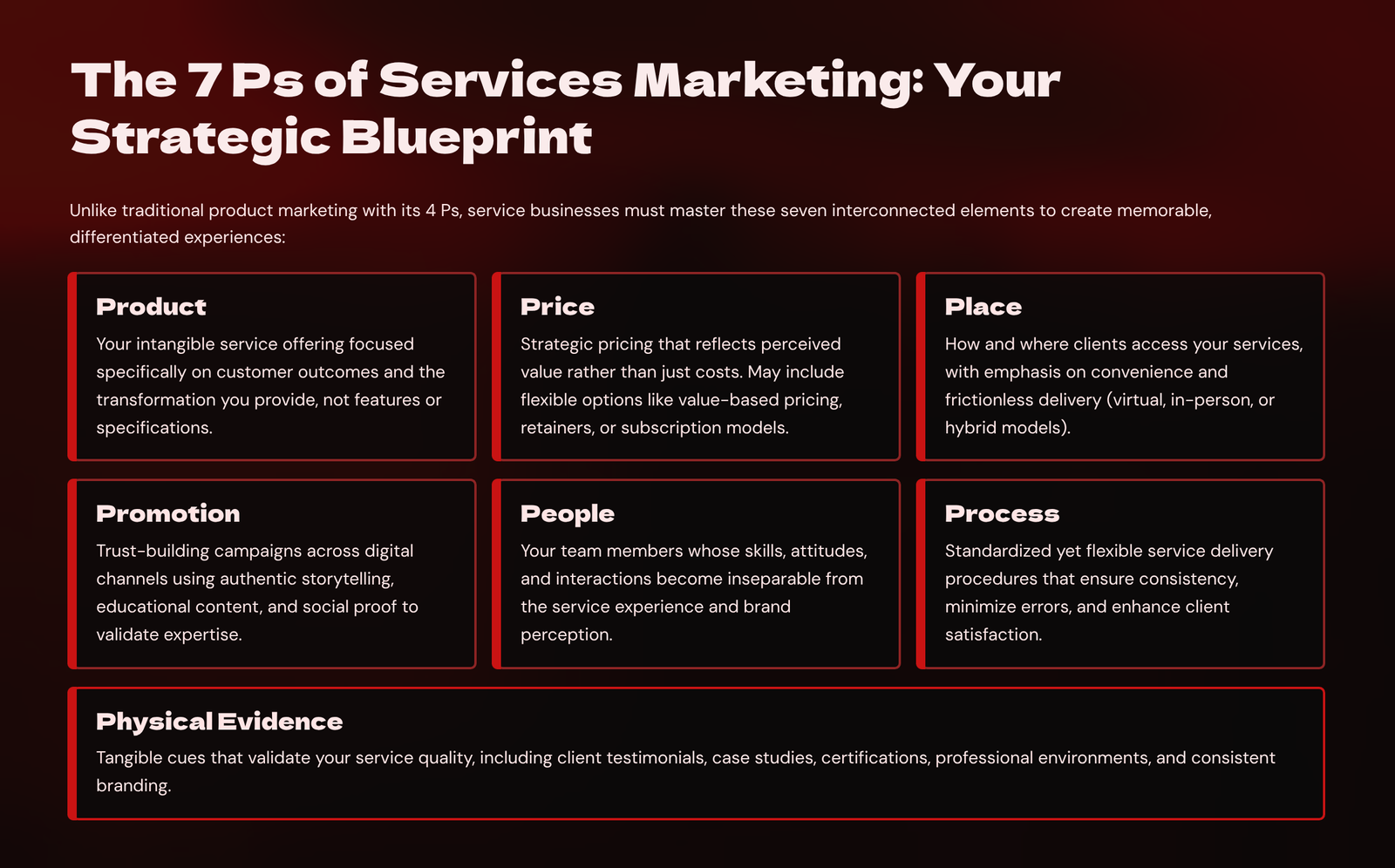
A common mistake among service providers is offering vague, open-ended descriptions of what they do. To attract and convert leads, you need to clearly package and position your services into outcomes-based offers. Instead of saying “I offer marketing services,” say “I help small businesses grow their leads by 200% in 90 days with my Digital Visibility Accelerator.” Outcomes sell, not hours. Packages should be framed around a transformation, a timeline, and a process—making the intangible more tangible.
Create tiered pricing to suit different budgets (e.g., starter, premium, VIP) and include bonuses, deliverables, or guarantees to increase perceived value. Pricing should reflect the result, not the input. A £2,000 service that helps someone land £50,000 in contracts is a no-brainer. Display your packages clearly on your website or landing page with comparison charts, testimonials, and FAQs. Help the buyer visualise what they’re getting and how it solves their specific problem. By productising your services, you make the buying decision easier, reduce custom quoting, and enable scalable, systemised selling.
Building Authority Through Personal Branding
In service-based industries, people buy from people they trust. That’s why personal branding is essential—especially for solopreneurs, coaches, consultants, therapists, freelancers, and creatives. Your brand isn’t just your logo or headshot; it’s the story, tone, and reputation you consistently communicate across every channel. Share your origin story, values, credentials, behind-the-scenes, client wins, and thought leadership content. Speak directly to your target audience’s pain points with clarity and empathy. Post consistently on platforms like LinkedIn, Instagram, or YouTube, showcasing your process, philosophy, and testimonials. Create content that educates and inspires—blogs, videos, guides, and newsletters that solve specific problems and highlight your expertise. A strong personal brand builds familiarity and trust, shortens the sales cycle, and earns referrals even from people who’ve never bought from you. The key is authentic visibility: showing up with intention, integrity, and insight. When your audience sees you as a trusted authority, they come to you—no hard sell needed.

Lead Generation for Service Providers: Inbound and Referral Models

Generating leads for services involves building visibility, capturing attention, and nurturing relationships until a prospect is ready to engage. Inbound marketing is especially effective—attracting leads through content, SEO, social media, email, and webinars. Use lead magnets like guides (“10 Questions to Ask Before Hiring a Financial Advisor”) or templates (“Free Consultation Prep Checklist”) to capture emails. Follow up with nurturing sequences that educate, add value, and build desire. Also, implement a referral system: offer incentives to happy clients or strategic partners (like web designers referring SEO experts, or yoga teachers referring massage therapists). Networking groups, Facebook communities, podcasts, and local events are high-trust, low-cost lead sources. Set up a simple landing page with a clear CTA (“Book a Free 30-Minute Strategy Call”) and track conversions. Combine this with automated bookings using Calendly, Acuity, or your CRM to reduce friction. Lead generation is not about chasing—but creating a consistent pipeline of qualified, interested prospects who already see your value before the first conversation.
Automating Consultations, Follow-Ups, and Service Delivery

Time is your most limited resource in a service business—so you must automate wherever possible without losing the personal touch. Start with automated appointment scheduling using tools like Calendly, Acuity, or HoneyBook. Sync these with your email calendar and CRM. Create email sequences for new leads (“Here’s what to expect”), pre-call reminders, and post-consultation follow-ups with action steps, proposals, or testimonials. Use project management tools like Trello, Asana, or ClickUp to onboard clients, deliver materials, and monitor progress.
Create templates for proposals, onboarding documents, and reports to save time. Set up feedback surveys and testimonial requests at the end of each project to fuel future marketing. If you deliver recurring services (e.g., coaching, design retainers, health programs), consider building a member portal, email-based curriculum, or digital resource hub. Automating core workflows allows you to spend more time serving clients and growing your business, rather than drowning in admin.