What is SEO and Why It Matters
Search Engine Optimization (SEO) is the process of improving your website’s visibility in search engine results pages (SERPs), primarily Google. Unlike paid advertising, SEO is focused on attracting organic (unpaid) traffic by aligning your website content with what people are actively searching for online. When implemented correctly, SEO allows small businesses to compete with much larger players by gaining exposure at the exact moment a potential customer is searching for their product or service. For example, if you rank on page one for “best vegan bakery in Leeds,” you can attract hundreds of local customers without spending on ads. SEO helps build credibility—users tend to trust organic results more than paid ones.
Moreover, SEO has a compounding effect—once your pages rank well, they continue to bring traffic with minimal ongoing cost. However, SEO is not a one-time effort; it’s a long-term strategy involving keyword optimisation, quality content, technical fixes, and ongoing refinement. Entrepreneurs who ignore SEO miss out on high-intent, cost-effective traffic and are forced to rely entirely on ads or referrals. In the digital age, if you’re not ranking, you’re invisible. Understanding SEO ensures your business can be found, trusted, and chosen online.
Keyword Research: Understanding What Your Customers Are Searching
Keyword research is the cornerstone of effective SEO. It involves identifying the exact words and phrases your potential customers type into Google when looking for products, services, or information. These keywords help you shape your website content, blog posts, meta descriptions, and headlines to match user intent. For instance, someone typing “affordable digital marketing for small businesses” is likely looking for budget-friendly solutions—this keyword tells you what content to create and what language to use. Keywords fall into different categories: short-tail (e.g., “SEO”), long-tail (e.g., “how to improve SEO for a local coffee shop”), navigational (brand-based), informational (how-to queries), and transactional (intent to purchase).
Use tools like Google Keyword Planner, Ubersuggest, AnswerThePublic, or SEMrush to discover search volumes, competition levels, and related terms. Focus on keywords with decent search volume but low to medium competition, especially when starting out. Also consider search intent—are users looking to buy, learn, compare, or hire? Incorporating the right keywords naturally into your content—not stuffing them—helps Google understand your page and rank it accordingly. Regular keyword research ensures you stay aligned with evolving trends and customer interests, helping you stay ahead of competitors and improve visibility over time.
On-Page SEO: Optimising Individual Pages for Search Engines
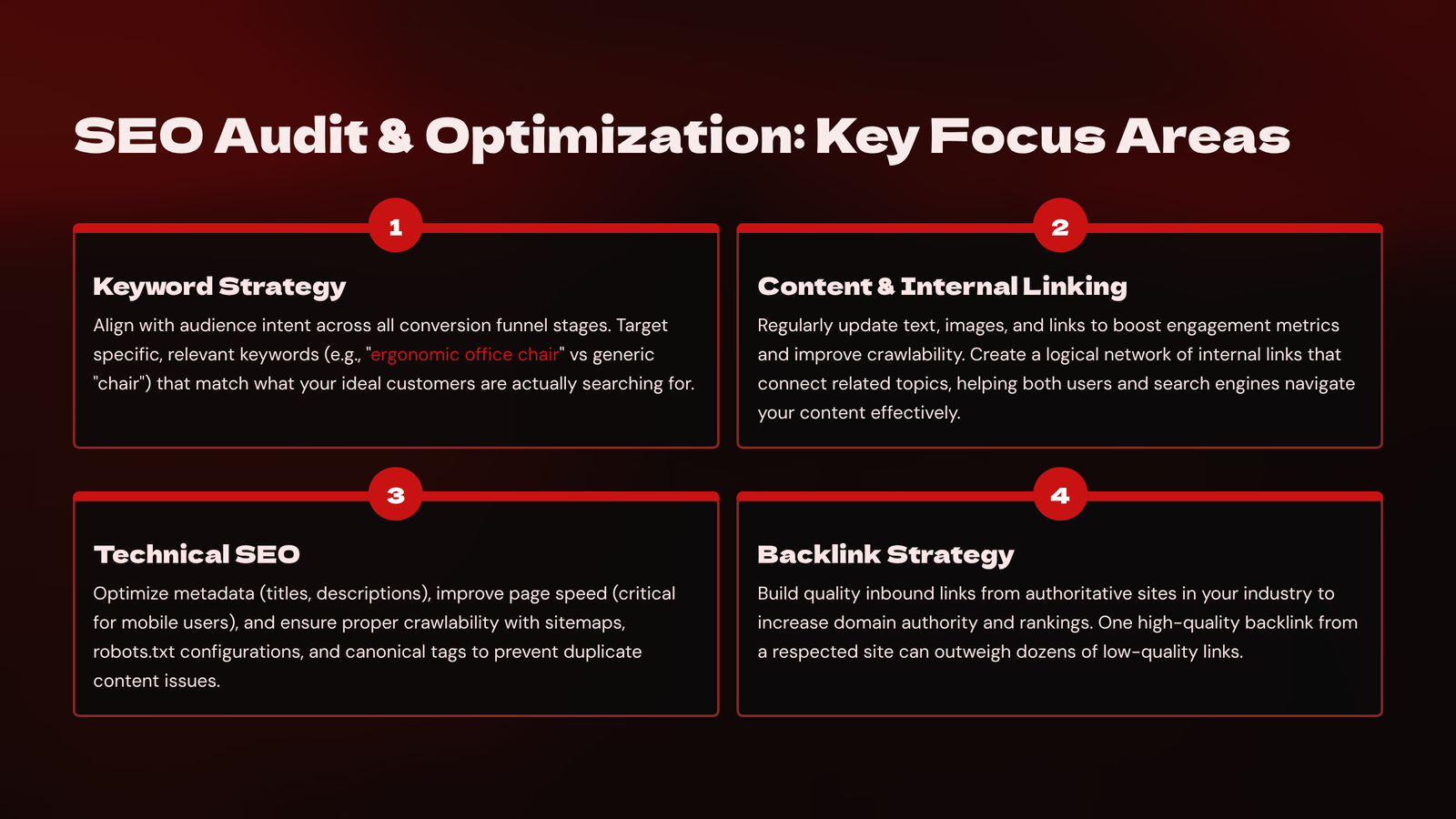
On-page SEO refers to the techniques used to optimise individual web pages to rank higher in search engines and attract more relevant traffic. It starts with placing your target keyword in strategic locations: the page title, meta description, URL, headings (H1, H2), image alt text, and first 100 words of content. These signals help search engines understand what the page is about. Beyond keywords, on-page SEO includes ensuring that your content is high-quality, original, well-structured, and provides clear value to the reader. Google rewards sites that answer search intent clearly and concisely. Additionally, internal linking—adding hyperlinks to other relevant pages within your site—helps users navigate and signals content relationships to Google. Use descriptive anchor text (e.g., “download our SEO checklist”) rather than vague links like “click here.” Image optimisation is often overlooked but important; compress images for fast loading and use keyword-rich filenames. Ensure your content is scannable by using bullet points, short paragraphs, and subheadings. Each page should target one main keyword and support it with related terms. Tools like Yoast SEO (for WordPress) or Rank Math can help you implement on-page SEO systematically. A well-optimised page satisfies both the user and the algorithm.

Technical SEO: Making Your Website Search-Engine Friendly

Technical SEO refers to the behind-the-scenes improvements that ensure search engines can crawl, index, and rank your website efficiently. Even with great content, if your site has technical issues—like broken links, slow load times, or crawl errors—Google may penalise or ignore it. Start by ensuring your website is mobile-friendly using responsive design. Next, improve page load speed by compressing images, leveraging browser caching, and minimising code (CSS/JavaScript). Use tools like Google PageSpeed Insights, GTmetrix, and Pingdom to diagnose performance issues. Create an XML sitemap and submit it to Google Search Console to help bots navigate your site. Implement HTTPS encryption (secure connection), as Google prioritises secure websites. Check for duplicate content, which can confuse search engines, and use canonical tags to point to the preferred version. Use schema markup (structured data) to enhance your listings in search results with reviews, FAQs, or event data. Avoid broken links and fix crawl errors reported in Google Search Console. Lastly, make sure your website has a clean URL structure and avoids unnecessary redirects. Technical SEO is invisible to users but critical to search engine performance—it lays the groundwork upon which all other SEO efforts rest.
Local SEO: Attracting Customers in Your Geographic Area

Local SEO is essential for small businesses that serve a specific geographic area. Whether you run a bakery, yoga studio, or plumbing service, local SEO helps you rank higher for searches like “café near me” or “best dentist in Sheffield.” Start by setting up and optimising your Google Business Profile (formerly Google My Business).
Fill out every detail—business name, address, phone number (NAP), hours, photos, and business categories. Encourage happy customers to leave Google reviews, which are a powerful ranking factor and trust signal.
Use location-specific keywords throughout your site—for example, “affordable graphic designer in Manchester.” Create dedicated landing pages for each location if you serve multiple areas. List your business in consistent NAP format across trusted directories like Yelp, Bing Places, and Apple Maps.
Embed a Google Map on your contact page and include local schema markup. Posting regular updates and offers on your Google profile also signals activity. Monitor performance using Google Business Insights. Local SEO puts your business in front of customers when they’re ready to act, often leading to phone calls, foot traffic, or immediate bookings. For many small businesses, local SEO is the most valuable form of organic traffic.
Backlinks and Off-Page SEO: Building Authority
Off-page SEO focuses on improving your website’s reputation and authority through backlinks—links from other reputable websites pointing to yours. Google sees backlinks as “votes of confidence.” The more high-quality, relevant sites that link to you, the more likely your pages are to rank well. However, not all backlinks are equal. A link from a well-known site like BBC, Forbes, or a respected industry blog is far more valuable than dozens of links from low-authority, unrelated blogs. Begin by creating valuable, shareable content—such as guides, infographics, or original research—that people naturally want to link to. Reach out to relevant bloggers or businesses and offer guest posts, collaborations, or content exchanges. List your site in authoritative local directories.
Avoid shady practices like buying backlinks or joining link farms, as these can lead to Google penalties. Another element of off-page SEO is social signals—while likes and shares are not direct ranking factors, they increase visibility and traffic, which can lead to backlinks. Tools like Ahrefs, Moz, and SEMrush help you analyse your backlink profile and monitor competitor links. Building links takes time, but it’s essential for improving domain authority and driving sustainable SEO growth.
Measuring SEO Success and Making Adjustments
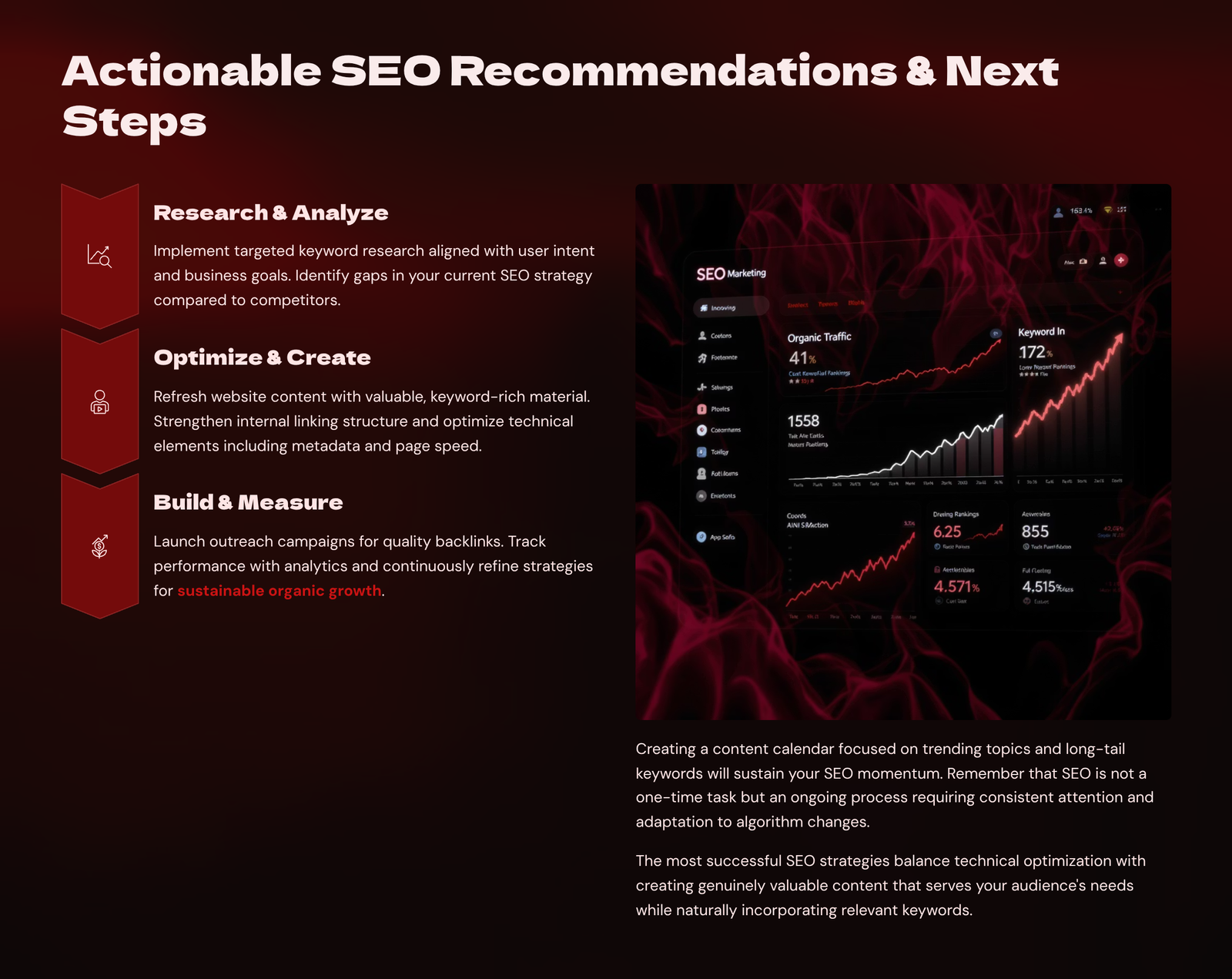
SEO is a long-term game, but it must be data-driven. Measuring the right metrics helps you understand what’s working and where to improve. Start by tracking organic traffic, bounce rate, and average session duration using Google Analytics. Use Google Search Console to monitor impressions, click-through rates (CTR), keyword rankings, and indexing errors. Pay close attention to your top-performing pages—what content or layout is helping them succeed? Are people landing on your pages but not taking action? Use behaviour flow and heatmaps (e.g., Hotjar) to understand user interaction. If your goal is lead generation, track conversions from organic traffic. Use tools like SEMrush or Ahrefs to track your position on important keywords and analyse what your competitors are ranking for. Review performance monthly and look for trends. Did a recent blog post cause a spike? Did a technical issue cause a drop? SEO is iterative—test new keywords, improve underperforming pages, remove outdated content, and build new backlinks. Regular SEO reviews help you stay aligned with algorithm changes and maintain growth. Remember: good SEO doesn’t always mean higher traffic—it means more qualified traffic that converts.